Feed Enzyme Sourcing Checklist: Using Animal Feed Enzymes in Poultry Feed Formulations
A sourcing checklist for poultry feed mills: compare phytase, xylanase, protease, dosage, QC, COA/TDS/SDS, and cost-in-use before approving a feed enzyme.
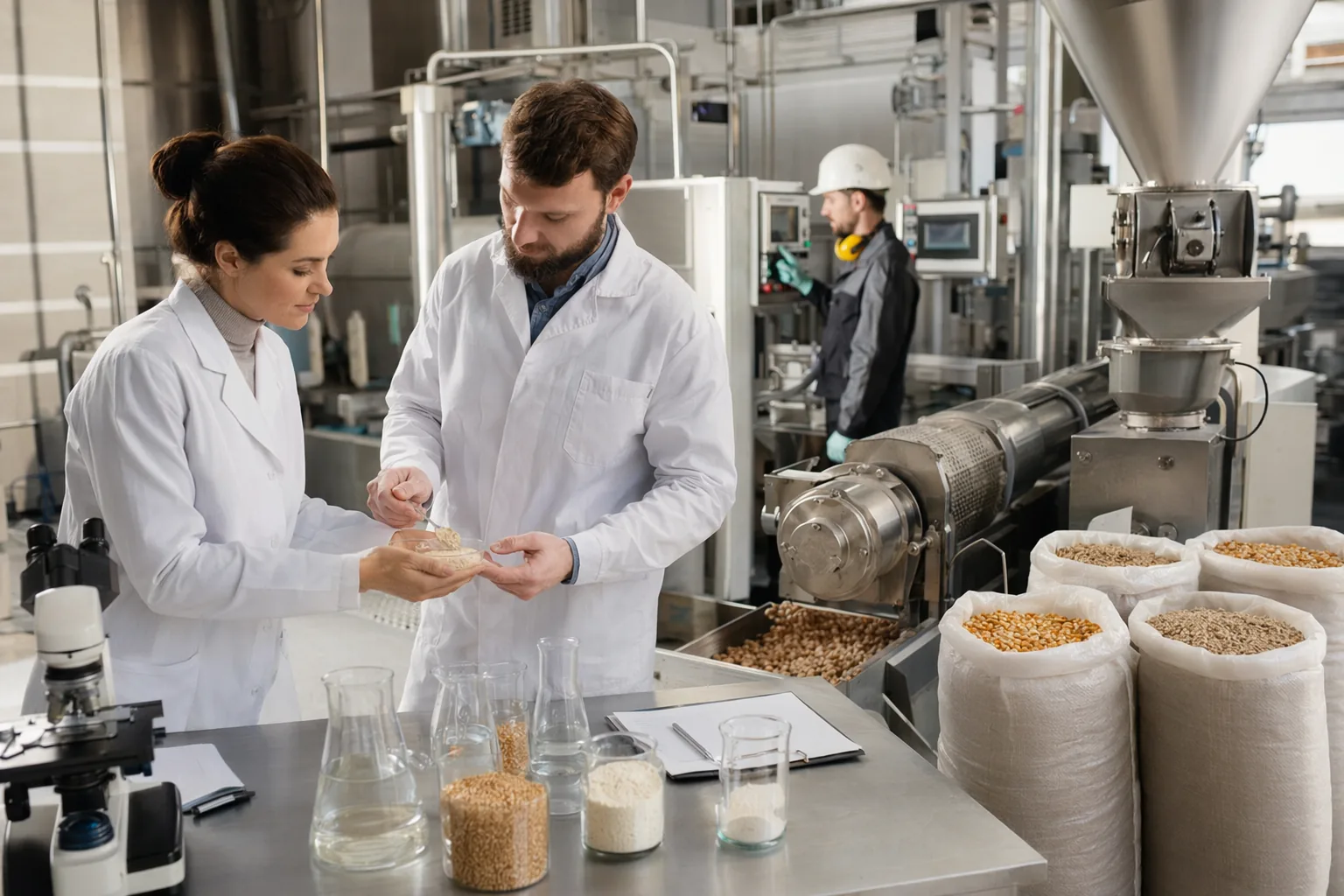
For feed mills, premix manufacturers, and integrators, a feed enzyme is a formulation tool for improving nutrient release, managing ingredient variability, and controlling cost-in-use in poultry diets, and this checklist sets out what to confirm before one goes into the formula. Feed mills, premix makers and distributors can request a quote with the product, quantity and destination.
Why poultry formulators buy wholesale feed enzymes
Wholesale feed enzymes are purchased by feed manufacturers to improve the digestibility of common poultry ingredients such as corn, wheat, soybean meal, rice bran, and alternative protein meals. In commercial formulation, the objective is not a generic health claim; it is measurable nutrient release, lower feed cost, and more consistent performance when raw materials vary. Phytase feed programs target phytate-bound phosphorus and associated mineral interactions. Xylanase poultry feed applications target arabinoxylans in wheat, corn, and by-products that can increase digesta viscosity. Protease may be used where protein meals vary in digestibility. The best animal feed enzyme program starts with a defined diet type, bird age, processing method, and nutrient matrix assumptions. Buyers should request technical guidance for the intended formulation and confirm whether the product is designed for mash feed, pelleted feed, post-pellet liquid application, or premix inclusion.
Primary users: feed mills, integrators, premix plants, and distributors • Main applications: broiler starter, grower, finisher, breeder, and layer diets • Common enzyme classes: phytase, xylanase, beta-glucanase, protease, amylase, and mannanase
Match enzyme type to substrate and formulation goal
Enzyme selection should begin with substrate mapping. Phytase is considered when the formula contains phytate from cereals, oilseed meals, and plant protein concentrates. Xylanase is selected when arabinoxylan content is relevant, especially in wheat-based diets but also in corn-soy formulations containing fibrous co-products. Beta-glucanase is more relevant where barley or oats are used. Protease targets protein digestibility and may support amino acid matrix values only after validation. Amylase can be considered in young birds or diets with starch digestibility concerns. Buyers comparing feed enzymes should ask whether the supplier provides matrix recommendations for phosphorus, calcium, metabolizable energy, and amino acids, and whether these values are supported by trial data in poultry. Avoid applying one matrix across all diets without adjustment; ingredient quality, particle size, heat treatment, and anti-nutritional factors can change the realized response.
Phytase: phytate phosphorus and mineral release • Xylanase: arabinoxylan degradation and viscosity control • Protease: protein digestibility support after validation • Beta-glucanase: barley, oats, and beta-glucan-rich materials
Practical dosage bands and process conditions
Dosage must be based on declared activity units, not only inclusion percentage. A common phytase range in poultry feed is 500 to 1,500 FTU/kg of complete feed, depending on matrix value and regulatory or customer requirements. Xylanase products are often applied from tens to several thousand activity units per kilogram, because unit definitions vary by assay; always compare by supplier method. Protease and multi-enzyme blends also require product-specific unit interpretation. Many feed enzymes are active across acidic to mildly acidic gut conditions, often around pH 2.5 to 6.5, but the optimum differs by enzyme source. Pelleting stability is critical: steam conditioning may expose enzymes to 75–90°C or higher for short periods. Thermostable granules, coating, or post-pellet liquid application can reduce activity loss. Validate recovery in mash, conditioned meal, pellets, and stored feed.
Confirm activity units and assay method on the COA • Check pH activity profile against poultry gut conditions • Measure enzyme recovery after pelleting and cooling • Account for storage temperature, humidity, and premix dilution
Quality control documents buyers should require
Before approving wholesale feed enzymes, request a current COA, TDS, and SDS for each product and manufacturing site. The certificate of analysis should identify batch number, declared enzyme activity, assay method, production date or retest date, and relevant physical specifications such as appearance, moisture, particle size, or carrier. The technical data sheet should state recommended inclusion range, application method, pH and temperature profile, storage conditions, compatibility notes, and packaging. The safety data sheet supports safe handling, dust control, spill response, and worker training. For incoming QC, feed mills commonly verify packaging integrity, lot traceability, odor and flowability, moisture if relevant, and enzyme activity using an agreed external or internal assay. Finished feed QC should include recovery checks after pelleting and periodic stability tests during warehouse storage.
COA: batch activity, assay method, and release specifications • TDS: dosage, process limits, compatibility, and storage guidance • SDS: handling, dust exposure, PPE, and spill procedures • QC: incoming inspection plus finished-feed activity recovery
Pilot validation, supplier qualification, and cost-in-use
A purchasing decision should be based on cost-in-use, not only enzyme price. Compare the delivered cost per ton of complete feed, expected nutrient matrix contribution, pelleting recovery, overage requirement, storage loss, and service support. Pilot validation can start with a small batch in the target poultry feed formula, followed by activity recovery testing and, where possible, a controlled feeding evaluation. Supplier qualification should assess production consistency, lot traceability, documentation speed, technical support, packaging options, lead time, and complaint handling. Distributors should also confirm whether the product can tolerate local transport and warehouse conditions. Because the feed enzymes market includes many activity definitions and blend formats, request side-by-side calculations using the same finished-feed target. A lower inclusion cost may not be economical if activity loss or weak technical documentation increases formulation risk.
Calculate cost per metric ton of finished poultry feed • Use pilot batches before full commercial conversion • Compare matrix value only after equivalent activity recovery • Qualify suppliers on documentation, traceability, and support
Technical Buying Checklist
Before you ask for a quote, write down the diet type, species and production stage, the feed form and processing temperature, the expected annual volume, the pack size and inclusion equipment you use, and the destination. With those on the inquiry, a supplier can quote accurately.
Ask for samples drawn from commercial batches, not special trial lots • Ask how the supplier keeps retained samples and handles deviations • Ask to be told in advance of any change to activity, carrier or formulation • Keep the approved supplier file updated with the current COA, TDS and SDS versions
Buyer Questions
Compare products by delivered activity in finished feed, not by price per kilogram. Request the COA, TDS, and SDS, then check activity units, assay method, inclusion rate, heat stability, pH profile, and shelf life. Run a pilot batch in your actual poultry formula and test enzyme recovery after pelleting. Use cost-in-use per metric ton, including matrix value and expected processing loss.
Many poultry formulations use phytase around 500 to 1,500 FTU/kg of complete feed, but the correct rate depends on diet composition, phosphorus and calcium targets, supplier matrix values, and heat recovery. Do not transfer a dosage blindly between products because assays and stability differ. Confirm the target activity in the finished feed and validate phosphorus release assumptions with technical support.
Some xylanase products are designed for pelleting, while others require lower conditioning temperatures or post-pellet liquid application. Conditioning may expose feed to about 75–90°C or higher for short periods, which can reduce activity. Ask for thermal stability data, then verify recovery in your pellet mill. Coated granules and controlled application points can improve delivered activity when processing conditions are demanding.
Avoid accepting vague activity claims, missing COAs, unclear unit definitions, or products without a TDS and SDS. Be cautious if a supplier cannot explain assay methods, heat stability, batch traceability, or recommended storage. Do not rely on unverifiable performance promises. Require pilot validation, incoming QC, and finished-feed activity recovery before scaling a new animal feed enzyme into commercial poultry production.
Feed-Grade Enzyme Blends for Research & Industry
Need Feed-Grade Enzyme Blends for your lab or production process?
ISO 9001 certified · Food-grade & research-grade · Ships to 80+ countries
Frequently Asked Questions
How do I compare wholesale feed enzymes from different suppliers?
Compare products by delivered activity in finished feed, not by price per kilogram. Request the COA, TDS, and SDS, then check activity units, assay method, inclusion rate, heat stability, pH profile, and shelf life. Run a pilot batch in your actual poultry formula and test enzyme recovery after pelleting. Use cost-in-use per metric ton, including matrix value and expected processing loss.
What dosage should be used for phytase feed in poultry diets?
Many poultry formulations use phytase around 500 to 1,500 FTU/kg of complete feed, but the correct rate depends on diet composition, phosphorus and calcium targets, supplier matrix values, and heat recovery. Do not transfer a dosage blindly between products because assays and stability differ. Confirm the target activity in the finished feed and validate phosphorus release assumptions with technical support.
Can xylanase poultry feed enzymes survive pelleting?
Some xylanase products are designed for pelleting, while others require lower conditioning temperatures or post-pellet liquid application. Conditioning may expose feed to about 75–90°C or higher for short periods, which can reduce activity. Ask for thermal stability data, then verify recovery in your pellet mill. Coated granules and controlled application points can improve delivered activity when processing conditions are demanding.
What should not be accepted during supplier qualification?
Avoid accepting vague activity claims, missing COAs, unclear unit definitions, or products without a TDS and SDS. Be cautious if a supplier cannot explain assay methods, heat stability, batch traceability, or recommended storage. Do not rely on unverifiable performance promises. Require pilot validation, incoming QC, and finished-feed activity recovery before scaling a new animal feed enzyme into commercial poultry production.
Request a quote
Request a technical quotation, COA/TDS/SDS package, and pilot-batch guidance for wholesale poultry feed enzymes. See our application page for Enzyme Solutions for Liver-Support Pet Diets for specs, MOQ, and a free 50 g sample. To request a quote, send the product, the quantity and the destination.
Contact Us to Contributehello@mail.enzymeboost.com