Enzyme Formulation for Poultry Feed: What to Check Before an Enzyme Goes Into the Formula
Enzyme formulation for poultry feed from the buyer's side: what a 2026 broiler trial showed about label versus measured activity and pellet recovery, lot checks, a pilot plan and how to request a quote.
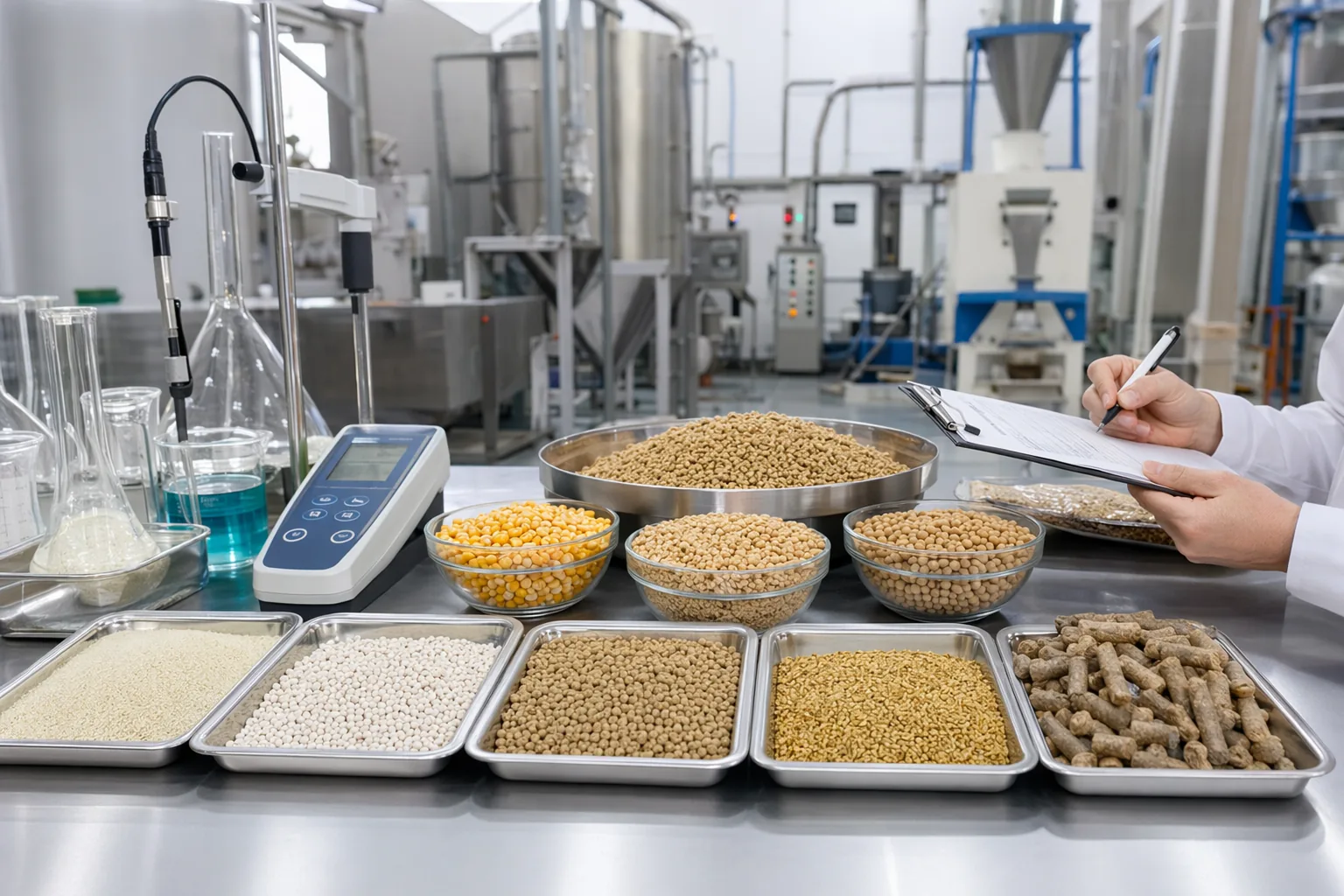
Feed is the biggest cost in a poultry house, and the birds pass part of what they eat straight through, because maize, soybean meal and the other plant ingredients hold nutrients they cannot digest on their own. Most of the phosphorus in plant ingredients is locked in a form poultry use poorly, so the formula carries added mineral phosphate and the surplus ends up in the litter. An enzyme in the formula is meant to win that value back, but the grade on the label and the activity that reaches the bird are not always the same thing. This page is for feed mills, premix makers and integrators who formulate poultry diets: what a recent broiler trial showed about commercial enzyme grades, what to check on every lot, and what to send us for a quote and a sample.
The business problem: paying for activity you do not receive
A formulator who takes nutrient credit for an enzyme is betting the diet on the activity printed on the bag. In a 2026 broiler trial that compared three commercial grades of the same enzyme type, the activity measured in the laboratory differed from the label for all three, one well above it and one slightly below. The same trial measured how much activity was still present after pelleting, and the spread was wide: for one grade, some pellet samples kept less than a fifth of the activity while others kept nearly all of it. A lot that lands at the low end of that spread delivers far less than the formula assumes, and the shortfall shows up later as weaker birds, not as a line on the invoice.
What the trial did, and what it found
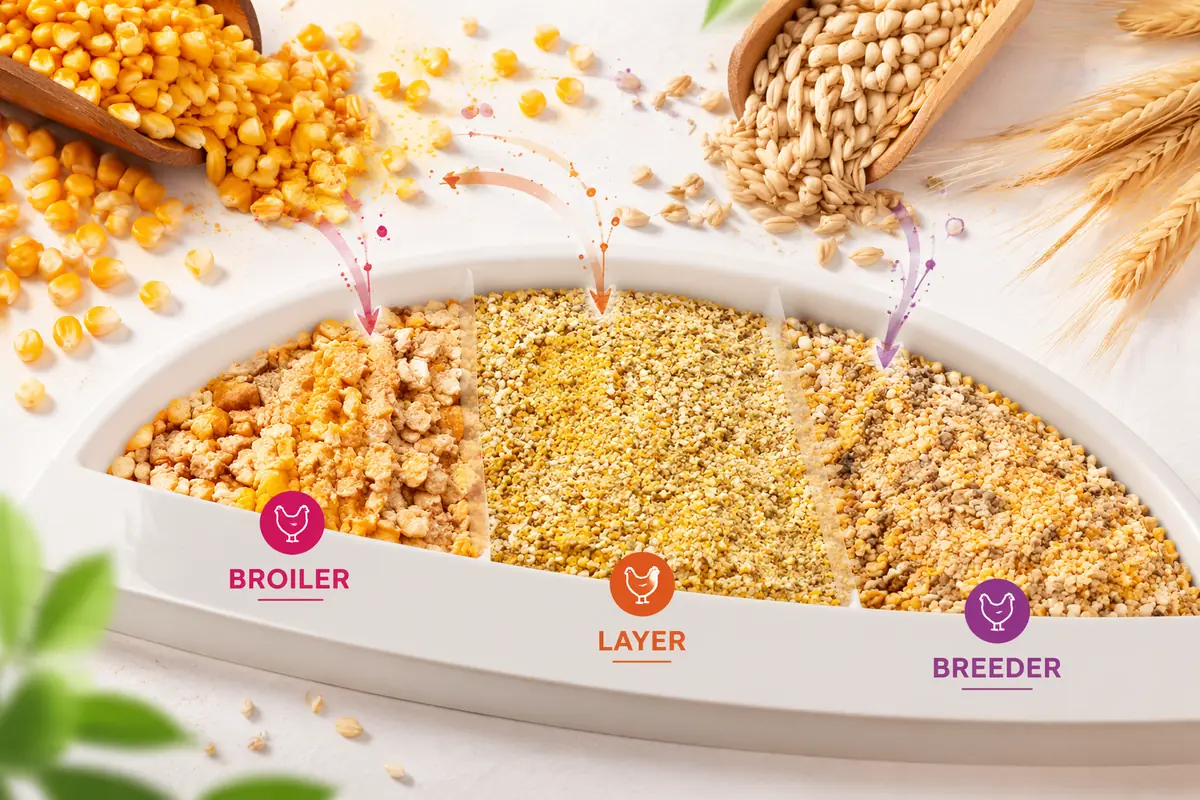
The study followed male broiler chicks from day 0 to day 42 on pelleted feed conditioned at 80°C and pressed into 3 mm pellets. The diets were built on maize with cassava, soybean meal, DDGS, rapeseed meal and wheat bran, the kind of mixed plant formula many mills use when prices move. The feeding programmes compared were these:
Positive control: Normal added mineral phosphate; Benchmark growth and a production efficiency index of 500 • Negative control: Phosphorus cut in the starter phase only; Worst result by far: an index of 199 • No mineral phosphate plus one of the three enzyme grades: Monocalcium phosphate removed, calcium balanced with limestone, enzyme dosed by growth stage; 42-day body weight of 3124 to 3250 g and an index of 462 to 488, not significantly different from the positive control
Bone ash, feed conversion and survival in all three enzyme groups were clearly better than in the negative control and close to the positive control. In the first ten days one grade gave slightly lower gain than the control while the other two tracked it; from the middle phase on there was no difference between the three grades. The authors' conclusion was that, under these conditions, the commercial grades performed alike and each could replace the added mineral phosphate without loss of performance.
What this means for a buyer
If several grades deliver the same result in the bird, the decision moves to delivered activity and cost per tonne of finished feed, not to the brand on the bag. • The label is a starting point: the trial found every grade off its label, so ask how activity is assayed and check incoming lots yourself when the formula leans on the enzyme. • Pelleting is where value is lost or kept: recovery varied widely between samples, so measure activity in your own finished pellets, not only in the powder. • Watch the starter phase: the only difference between grades in the trial appeared in the first ten days, which is where a weaker grade shows first. • The trial covered one breed, one site and one set of ingredients; the authors themselves call for work on dose and on longer-term health before wider use.
How the enzyme gets into the feed
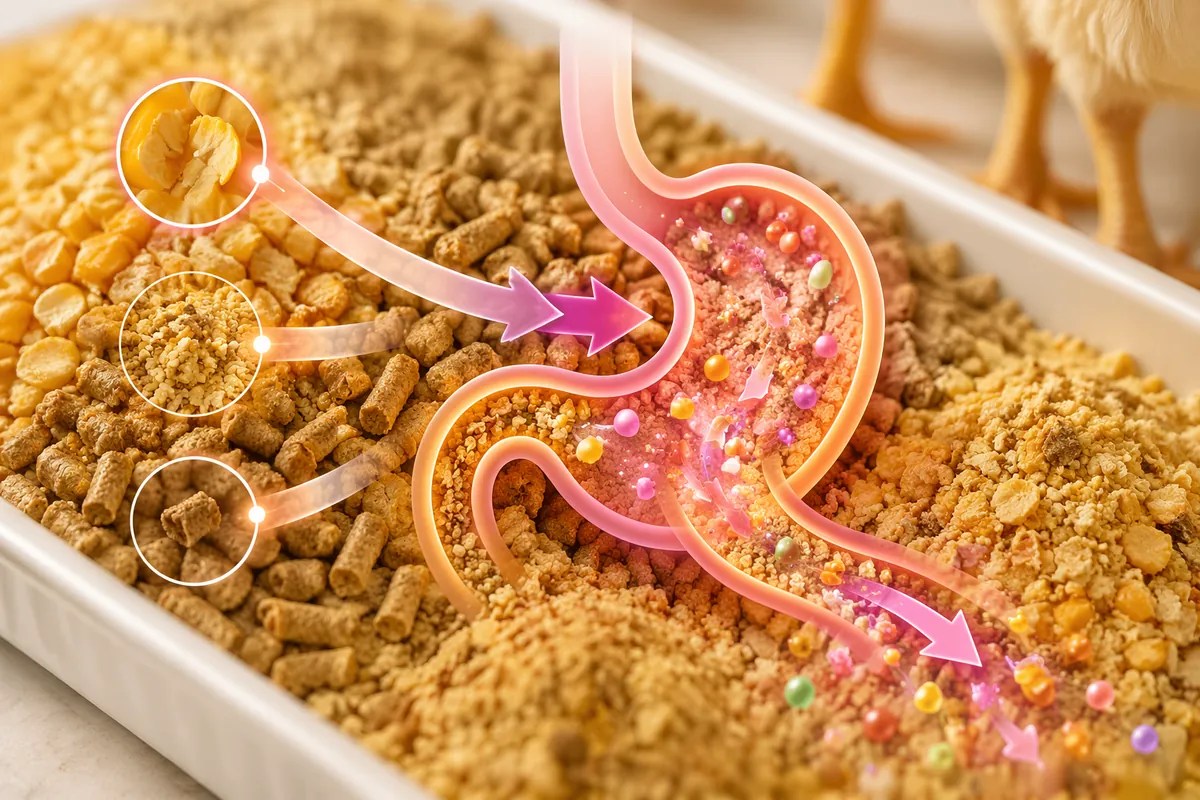
For mash, the enzyme is mixed straight into the feed at the ratio on the product instruction. For pellets, the mill adds it during production, so the farm buys feed that already carries it. Some liquid grades can go into the drinking-water line instead of the feed. Each species needs its own choice: compound enzymes for pig diets on maize and soybean meal, phosphorus-releasing enzymes for poultry, where they replace part of the added phosphate, and fibre enzymes for cattle and sheep.
Mistakes that waste the enzyme
Buying on the headline activity alone, without asking how it was measured; the trial found the assayed figure off the label for every grade. • Taking full nutrient credit before checking recovery after your own pelleting; in the trial, recovery of one grade swung from a small fraction to nearly all of its activity between samples. • Rolling a new enzyme out across every house at once instead of testing it on a small group first and widening only when the result holds. • Assuming one product fits every species; the right enzyme depends on the animal and on the ingredients in the ration. • Buying from a producer that cannot show its production licence and product registration.
A pilot plan before full adoption
Pick the diet the enzyme is meant to improve and write down the credit you plan to take. • Ask for a sample and the COA of the lot, and have the activity checked in your own laboratory or an outside one. • Run the sample through your conditioner and pellet mill and measure what is left in the finished feed. • Feed it to a small group alongside your current programme and compare weight, feed conversion and survival, with extra attention to the starter phase. • Only then roll it out across the farm.
Feed-Grade Enzyme Blends for Research & Industry
Need Feed-Grade Enzyme Blends for your lab or production process?
ISO 9001 certified · Food-grade & research-grade · Ships to 80+ countries
Frequently Asked Questions
Does the activity on the label match what reaches the bird?
Not always. In a 2026 broiler trial that compared three commercial grades of the same enzyme type, the activity measured in the laboratory differed from the label for all three, and recovery after pelleting varied widely between samples. Check incoming lots and your own finished pellets when the formula leans on the enzyme.
Did the commercial grades perform differently in the birds?
Under the trial's conditions they performed alike: diets with the added mineral phosphate removed and one of the three grades reached 42-day body weights of 3124 to 3250 g, not significantly different from the positive control. The only difference appeared in the first ten days, where one grade gave slightly lower gain.
How is the enzyme added to mash and to pellets?
For mash it is mixed into the feed at the ratio on the product instruction; for pellets the mill adds it during production. Some liquid grades can go into the drinking-water line.
What should I send for a quote?
Send the product, the quantity and the destination, plus the species, whether the feed is pelleted or fed as mash, and the diet the enzyme is for. Ask for the COA and a sample with your inquiry.
Request a quote
Request a poultry feed enzyme formulation review with COA/TDS/SDS documentation and pilot validation support. We supply feed-grade enzyme blends to feed mills, premix makers, integrators and resellers. To get a quote, send the product, the quantity and the destination, plus the species, whether the feed is pelleted or fed as mash, and the diet the enzyme is for. Ask for a sample with your inquiry.
Contact Us to Contributehello@mail.enzymeboost.com