Animal Feed Enzymes Supplier Guide for Poultry Feed
Source feed enzymes for poultry with specs on phytase, xylanase, dosing, QC, pilot validation, COA/TDS/SDS, and cost-in-use.
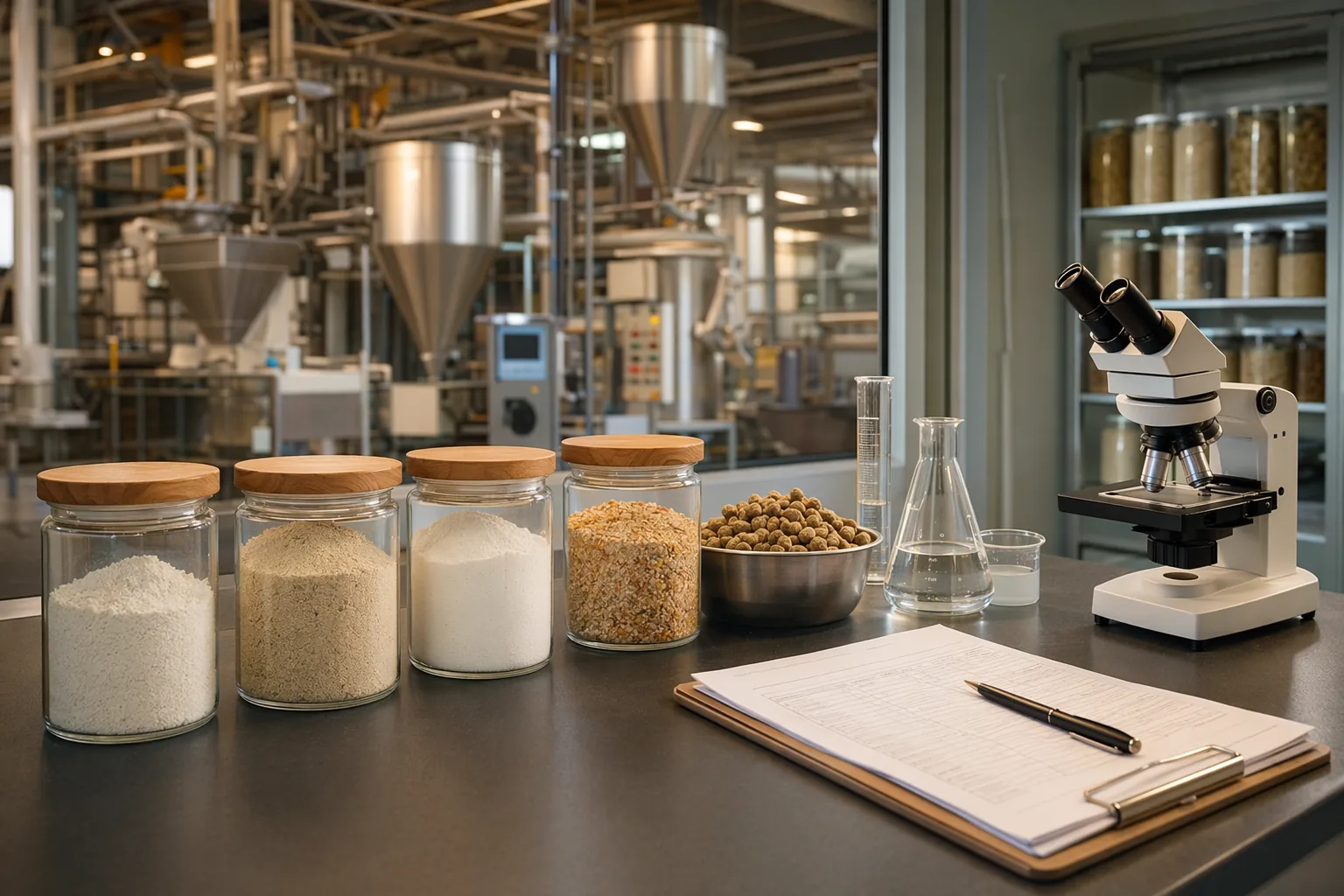
A practical B2B guide for poultry nutrition, procurement, and feed mill teams evaluating feed enzymes for performance, processing fit, quality control, and total cost-in-use.
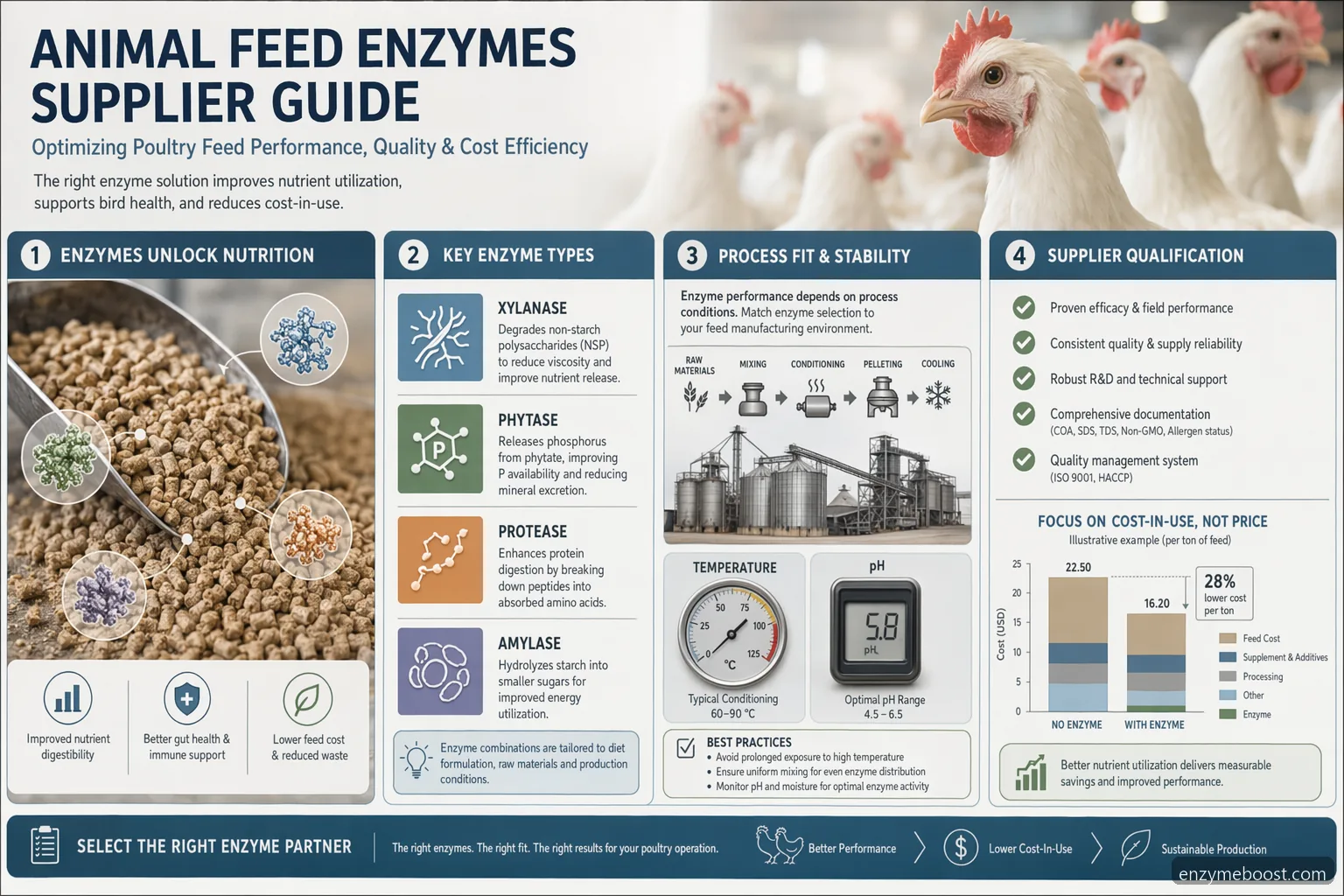
Why feed enzymes matter in poultry feed formulation
Feed enzymes are added to poultry diets to improve the value extracted from corn, wheat, soybean meal, alternative grains, and plant protein meals. In commercial broiler and layer feed, the most common targets are phytate-bound phosphorus, non-starch polysaccharides, and protein fractions that vary by crop origin and processing history. A buyer should connect each animal feed enzyme to a measurable formulation objective: releasing phosphorus, reducing digesta viscosity, improving amino acid availability, or supporting more consistent litter and manure nutrient profiles. The economic case depends on matrix values, ingredient prices, inclusion rate, and the enzyme activity that survives storage, mixing, and pelleting. For buyer-intent evaluation, focus on specifications, application data, and cost-in-use rather than broad claims. A supplier should be able to explain how its phytase feed or xylanase poultry feed product fits your ingredient basket and production process.
Primary poultry applications: broiler starter, grower, finisher, breeder, and layer feed. • Common enzyme targets: phytate, arabinoxylans, beta-glucans, and selected protein substrates. • Commercial value is typically assessed through nutrient matrix savings and performance consistency.
Key enzyme types and operating conditions
Phytase, xylanase, beta-glucanase, protease, amylase, and multi-enzyme blends are selected according to substrate presence and diet design. Typical phytase evaluation bands are 500 to 2,000 FTU per kg of finished feed, depending on matrix strategy and regulatory limits. Xylanase inclusion varies by activity unit, but trials often evaluate supplier-defined ranges such as 8,000 to 24,000 BXU or equivalent units per kg. Many poultry feed enzymes are designed to act across acidic to mildly acidic gastrointestinal conditions; phytase often shows relevance around pH 2.5 to 5.5, while xylanase products may be assessed around pH 4.0 to 6.5. Feed mill conditions matter. Mash mixing is generally mild, while pelleting may expose enzymes to 75 to 90 degrees Celsius for short residence times. For higher heat, ask about coated granules, thermostability data, or liquid post-pellet application.
Confirm the activity unit and assay method because units are not interchangeable. • Match enzyme format to handling: powder, granule, coated granule, or liquid. • Review pH profile, temperature profile, and post-pellet recovery data.
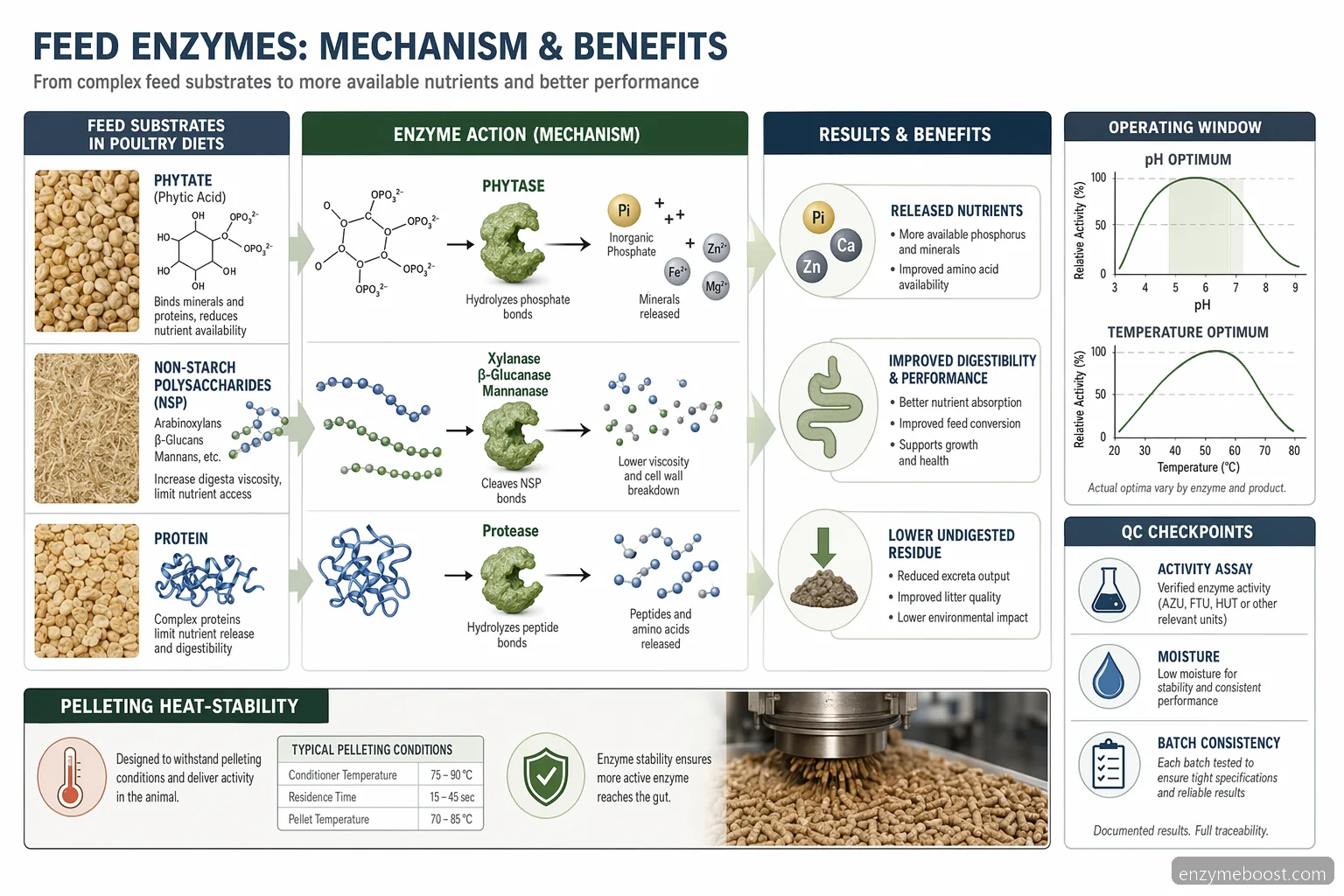
Supplier qualification for wholesale feed enzymes
A qualified supplier should support purchasing, nutrition, QA, and production teams with complete technical documentation. At minimum, request a certificate of analysis for each batch, a technical data sheet with activity definition and recommended use range, and a safety data sheet covering handling precautions. The COA should list lot number, declared activity, appearance, moisture or loss-on-drying where applicable, microbial limits when specified, and release date. For wholesale feed enzymes, also evaluate packaging integrity, minimum order quantity, shelf life, storage temperature, and batch traceability. Ask whether the supplier can provide retained sample procedures, deviation handling, and notification for material specification changes. Avoid relying on generic marketing language. A dependable animal feed enzyme supplier should be able to explain manufacturing controls, analytical methods, and the practical limits of performance data without making unsupported guarantees.
Request COA, TDS, SDS, shelf-life statement, and storage recommendations. • Check batch traceability from production lot to delivered package. • Clarify change-control communication for activity, carrier, or formulation adjustments. • Assess lead time, packaging size, pallet configuration, and export documentation needs.
Pilot validation and cost-in-use analysis
Before commercial adoption, run a structured pilot validation using your own feed ingredients, mixer, conditioner, pellet mill, and quality system. A typical assessment may compare control feed against one or more enzyme inclusion rates, with samples taken from mash, conditioned mash, pellets, and cooled finished feed. QC checks can include enzyme activity recovery, pellet durability index, moisture, bulk density, particle distribution, and homogeneity through tracer or nutrient variation testing. For poultry performance validation, align with your nutritionist and trial site on feed conversion ratio, body weight, mortality, litter observations, and nutrient matrix assumptions. Cost-in-use should include product price, dosage, delivered activity, formulation savings, handling labor, storage loss risk, and any dosing equipment needs. The best feed enzymes market comparison is not the lowest invoice price; it is the verified cost per effective activity unit in finished feed.
Sample before and after pelleting to estimate activity recovery. • Use the same basal diet and production settings when comparing suppliers. • Calculate cost per metric ton of finished feed and cost per recovered activity unit. • Document acceptance criteria before the pilot starts.
Procurement checklist for poultry feed buyers
When sourcing feed enzymes for poultry feed, start with a specification sheet that reflects diet type, target species, production stage, feed form, and processing temperature. Share expected annual volume, package preference, inclusion equipment, and destination requirements so suppliers can quote accurately. Compare phytase feed, xylanase poultry feed, and blend options against your formulation objectives and laboratory capability. A strong bid should include product activity, dosage guidance, stability information, documents available before shipment, lead time, shelf life, and technical support access. If you are qualifying a new supplier, request a representative sample for bench testing and a pilot quantity before committing to annual volume. Procurement should also confirm whether the supplier can maintain consistent lots during high-demand periods. This approach helps buyers manage volatility in the feed enzymes market while protecting formulation accuracy and feed mill reliability.
Define target enzyme activity in finished feed, not only inclusion weight. • Confirm compatibility with premix carriers, minerals, acids, and pelleting conditions. • Request pricing on a delivered, duty-aware, and cost-in-use basis. • Keep approved supplier files updated with current COA, TDS, and SDS versions.
Technical Buying Checklist
Buyer Questions
Feed enzymes are functional processing and nutrition additives used to help poultry access nutrients that may be limited by plant cell walls, phytate, or variable protein fractions. Common examples include phytase, xylanase, beta-glucanase, protease, and amylase. They are selected according to diet ingredients, feed form, production stage, and economic target. Buyers should verify activity units, dosage guidance, stability data, and QC documentation before approval.
Start with declared FTU activity, assay method, recommended dosage, pH profile, thermostability, and matrix values proposed by the supplier. Request a COA for the lot, a TDS explaining use conditions, and an SDS for safe handling. Then run a pilot using your actual diet and pelleting process. Compare recovered activity in finished feed and cost-in-use, not just quoted price per kilogram.
Xylanase value depends on the arabinoxylan content of ingredients such as wheat, corn by-products, and variable grain sources. Buyers should examine the supplier’s activity unit, substrate specificity, pH activity curve, and recovery after pelleting. Because xylanase units vary across methods, compare products only after confirming assay definitions. Pilot testing should include finished feed activity, pellet quality, and bird performance metrics agreed in advance.
No. EnzymeBoost.com focuses on industrial animal feed enzymes for feed manufacturers, integrators, premix companies, and distributors. Searches such as what to feed a dog with high liver enzymes, what not to feed a dog with high liver enzymes, what to feed dogs with high liver enzymes, what to feed dog with high liver enzymes, or what to feed a dog with high liver enzymes natural should be directed to a veterinarian.
For wholesale feed enzymes, request a current COA, TDS, SDS, shelf-life statement, storage instructions, batch traceability, and packaging specification. The COA should identify the lot and declared activity, while the TDS should define assay conditions, inclusion guidance, and handling notes. Supplier qualification should also include lead time, retained sample policy, change notification, and technical support for pilot validation.
Related Search Themes
what to feed a dog with high liver enzymes, what not to feed a dog with high liver enzymes, feed enzymes market, animal feed enzymes, wholesale feed enzymes, what to feed a dog with high liver enzymes natural
Feed-Grade Enzyme Blends for Research & Industry
Need Feed-Grade Enzyme Blends for your lab or production process?
ISO 9001 certified · Food-grade & research-grade · Ships to 80+ countries
Frequently Asked Questions
What are feed enzymes in poultry feed?
Feed enzymes are functional processing and nutrition additives used to help poultry access nutrients that may be limited by plant cell walls, phytate, or variable protein fractions. Common examples include phytase, xylanase, beta-glucanase, protease, and amylase. They are selected according to diet ingredients, feed form, production stage, and economic target. Buyers should verify activity units, dosage guidance, stability data, and QC documentation before approval.
How should a buyer evaluate phytase feed products?
Start with declared FTU activity, assay method, recommended dosage, pH profile, thermostability, and matrix values proposed by the supplier. Request a COA for the lot, a TDS explaining use conditions, and an SDS for safe handling. Then run a pilot using your actual diet and pelleting process. Compare recovered activity in finished feed and cost-in-use, not just quoted price per kilogram.
What matters most for xylanase poultry feed applications?
Xylanase value depends on the arabinoxylan content of ingredients such as wheat, corn by-products, and variable grain sources. Buyers should examine the supplier’s activity unit, substrate specificity, pH activity curve, and recovery after pelleting. Because xylanase units vary across methods, compare products only after confirming assay definitions. Pilot testing should include finished feed activity, pellet quality, and bird performance metrics agreed in advance.
Are these products the same as pet digestive supplements?
No. EnzymeBoost.com focuses on industrial animal feed enzymes for feed manufacturers, integrators, premix companies, and distributors. Searches such as what to feed a dog with high liver enzymes, what not to feed a dog with high liver enzymes, what to feed dogs with high liver enzymes, what to feed dog with high liver enzymes, or what to feed a dog with high liver enzymes natural should be directed to a veterinarian.
What documents should come with wholesale feed enzymes?
For wholesale feed enzymes, request a current COA, TDS, SDS, shelf-life statement, storage instructions, batch traceability, and packaging specification. The COA should identify the lot and declared activity, while the TDS should define assay conditions, inclusion guidance, and handling notes. Supplier qualification should also include lead time, retained sample policy, change notification, and technical support for pilot validation.
Related: Enzyme Solutions for Liver-Support Pet Diets
Turn This Guide Into a Supplier Brief Request feed enzyme specifications, samples, and a pilot validation plan for your poultry feed line. See our application page for Enzyme Solutions for Liver-Support Pet Diets at /applications/liver-support-pet-food-enzymes/ for specs, MOQ, and a free 50 g sample.
Contact Us to Contribute